

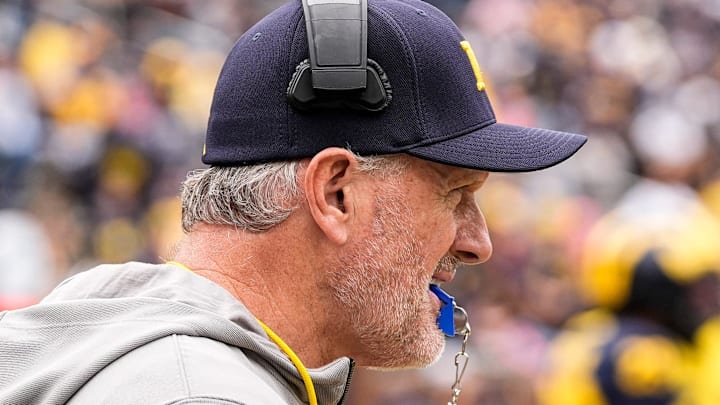
TTUN's head coach, Kyle Whittingham, doesn't sound confident in the Wolverines' ability to remain competitive in NIL/rev-share spending in the coming years. Particularly, Whittingham seems to fear what College Football payroll spending for players will look like in 2027.
Per Whittingham, "There are a few schools that can weather that, but not many. So it’s already unsustainable for most schools and is only going to get more so until we come up with a model that provides some guardrails and works for everyone."
Who is Whittingham afraid of? The Oregon Ducks, sure, as long as Phil Knight is around. Maybe the Indiana Hoosiers? Curt Cignetti claims IU didn't spend much to win the national championship last season. Maybe the USC Trojans? California taxes have to be cutting into their recruiting success.
Duh. It's the Ohio State University.
Ohio State football sets the standard in NIL/rev-share spending
The Ohio State Buckeyes were the first team to turn heads with a $20 million roster in 2024, then upped the ante in 2025 to a reported $35 million. Of course, the investment worked, and a national championship was won during the 2024/2025 College Football Playoff. Last year was successful, with an undefeated regular season and 11 prospects, if not a total banner season given how the playoffs went.
While the Texas Tech Red Raiders have become known as the gaudiest spenders, they're already the program branded as the one setting the most money on fire. TTU didn't score a single point in the 2025/2026 CFP and already lost out on Brendan Sorsby's massive investment from a gambling-related suspension.
Ohio State knows how to spend money and spend it on the right combination of players to be a nationally relevant powerhouse. It's tough to win two in a row, but the Buckeyes could be back on track for 2026 after how well Arthur Smith's offense has translated to the personnel.
Money should be back to translating directly to success after the Hoosiers hacked the system with their low-priced title run.
 Add us as a preferred source on Google