

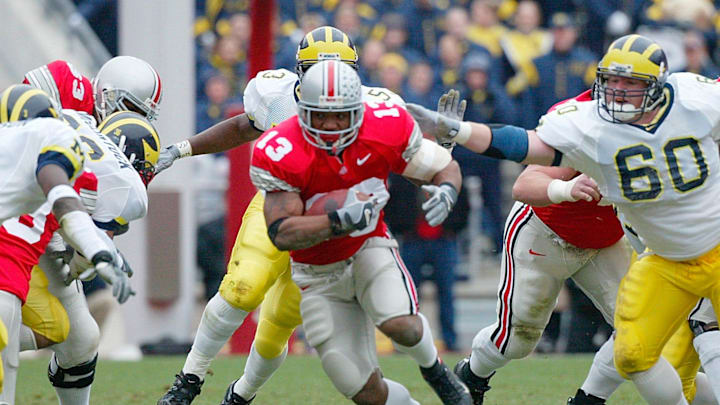
As more and more Ohio State football players enter the Transfer Portal, the Buckeyes continue to let prospects go by without adding them to the roster. Despite several high-profile visits, the Buckeyes have only brought in five players from the portal to offset the 30 they've lost.
Ross Bjork should receive the majority of the blame. His failure to use NIL effectively, while every other major program seems to be able to, is a massive problem. Of course, there is something to be said for the change in mindset for some of the college football players these days.
Former Ohio State running back Maurice Clarett had his own gripes with the NCAA. He tried to challenge the NFL rule so that he could enter the NFL after his freshman season. Ultimately, that failed. Regardless, he gave his take on the portal situation.
Maurice Clarett explains why Ohio State football players are transferring
From Clarett's perspective, he believes that college kids are just looking around to capture the most money possible.
There’s nothing going on besides money. Kids talk to kids. Parents talk to parents. Programs around the country need to win now. They’re paying a premium for guys. Not really hard to leverage yourself when you’re a former 4-5 star recruit that comes from Ohio State. 🤷🏾♂️
— Maurice Clarett (@ReeseClarett13) January 11, 2026
Not…
Clarett isn't wrong that Ohio State certainly props up other kids who aren't at the top of the depth chart. The cache of being at an elite program for a year helps them get more NIL money from a lower-level school, allowing them to maximize their earning potential.
That's still no excuse for what is happening with the Ohio State Buckeyes. There is no reason that they should have this many players exiting the program and so few coming in. Ryan Day needs to get Bjork's expectations in line for how the NIL game is played.
If that doesn't happen, Ohio State is going to start to fall behind very quickly. Other programs have risen, and old powers are using NIL to get back to the top, as well. The Buckeyes need to fix their approach before it is too late and they fall too far behind.
 Add us as a preferred source on Google